Account-based marketing (ABM) is a B2B growth strategy where each account is treated as its own distinct market. Exact, surgical and consistent, ABM often looks a lot like precision manufacturing.
But there’s a big problem with that approach: people aren’t machines. Traditional methods of ABM often forget that selling is ultimately a deeply human experience.
An engineered, tried-and-tested formula sounds reassuring, but the best ABM outcomes occur when brands can connect with their audience’s unique behaviours, needs and experiences.
88%
of B2B buyers trust a brand more when they receive valuable content from that vendor.1

An engineered, tried-and-tested formula sounds reassuring, but the best ABM outcomes occur when brands can connect with their audience’s unique behaviours, needs and experiences.
88%
of B2B buyers trust a brand more when they receive valuable content from that vendor.1
of buyers feel they need to trust the brands they buy from.2
of buyers go with their first choice.3
At MOI, we’ve seen that the strongest customer connections are forged across the entire buyer journey. So, brands that only focus on the last mile miss the bigger picture.
Effective ABM comes down to building relationships with buyers, by embedding ABM as a company-wide culture, not just a one-off project.
You do that by putting these three human elements at the heart of everything you do:
Empathy
Creativity
Resonance
Want faster revenue from ABM? Having direct conversations with account contacts, rather than just relying on data proxies, significantly enhances campaign impact.
88%
of B2B marketers consider their ABM program to be a fully embedded driver of growth.4
6-12
months
is how long most ABM programs need to deliver significant results. Long sales cycles can extend this further.5
87%
of sales and marketing executives say collaboration between the two functions enables critical business growth.6
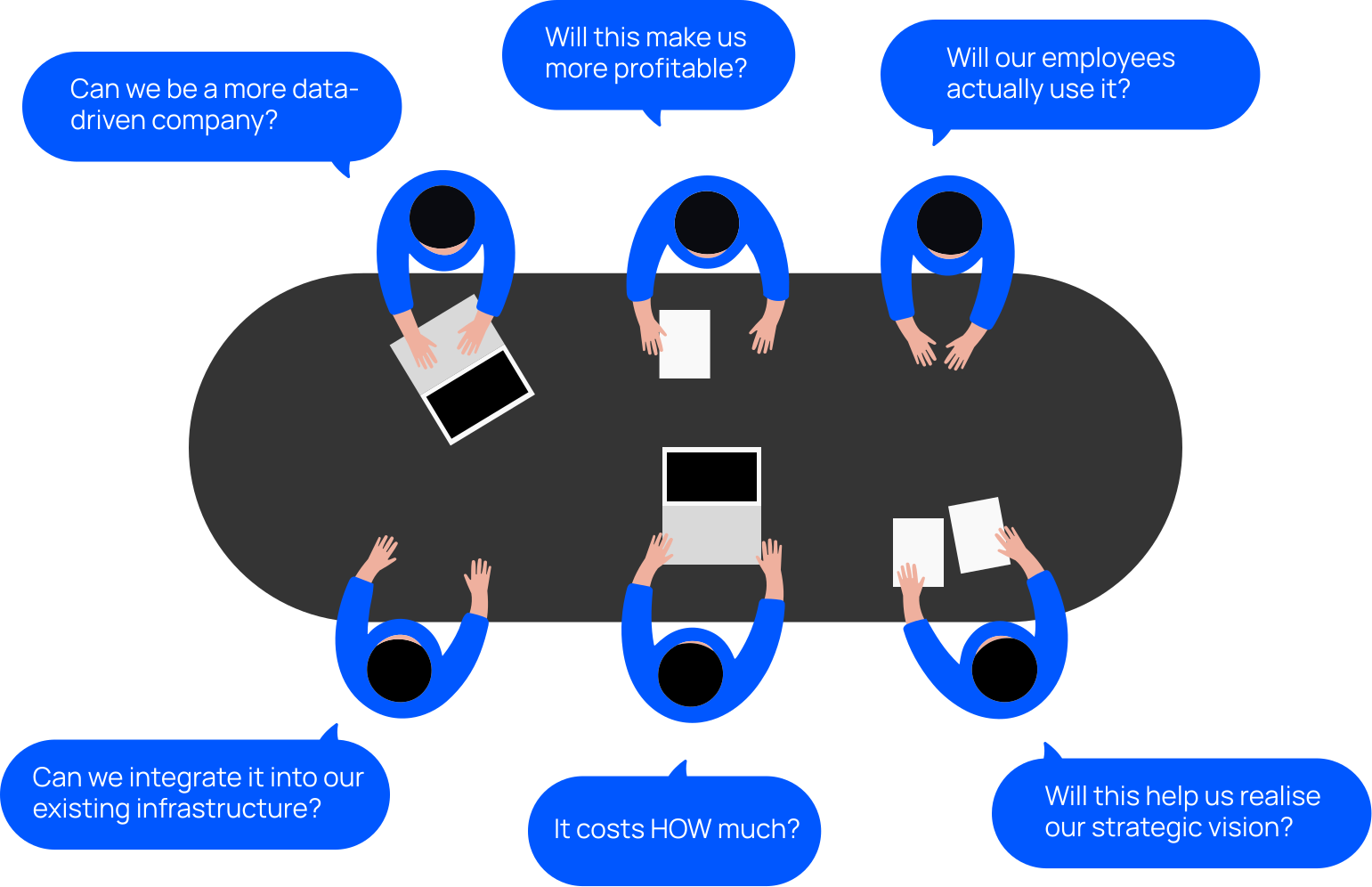
Relationships can get messy in B2B, where buyers tend to come in groups and a growing number of people are involved in making purchase decisions. Your ABM approach also needs to consider the relationships between them, the needs of individuals in the group, and how you can get them all on the same page to make the same decision.
You’ve got to do a better job of connecting those individual [customer] stakeholders together, because there’s disconnects among those stakeholders that prevent you from closing that deal.
Brent Adamson, Distinguished Vice
President, Gartner 7
10+
average number of people in an organization directly involved in the purchasing decision process.8
There’s also a wider buying network to consider, which includes any external parties people go to for support and advice, such as influencers, other customers, and even AI agents. Think about ways you can connect buyers to influencers, create customer advocates, or ensure people are accessing accurate information.
1. Decide your target and focus
15-20%
increase in marketing ROI when making data-driven decisions.9
30%
higher conversion rates for companies using AI-powered lead scoring in ABM, with up to 50% less time spent on lead qualification.10
Identify what accounts and verticals to engage across the full buyer’s journey. Think about:
2. Build your mindshare
70%
of ABM programs see a significant boost in account engagement when events, especially invite-only or intimate gatherings, are included.11
60%
increase in revenue per account using a multi-channel ABM approach.12
2/3
of marketers obtain superior ROI for ABM-based content syndication compared to traditional methods.13
Grow your relationship with your buyers and build an ABM culture internally.
Think about:
3. Drive business growth
50%
more sales-ready leads are generated using ABM.14
75%
higher conversion rates for target accounts when implementing an ABM approach.15
When there’s trust between marketing and sales teams, you can move into full ABM. That trust is vital for driving greater business outcomes. Think about:
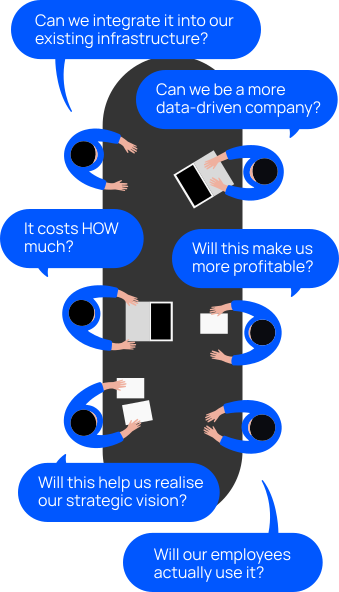
Relationships can get messy in B2B, where buyers tend to come in groups and a growing number of people are involved in making purchase decisions. Your ABM approach also needs to consider the relationships between them, the needs of individuals in the group, and how you can get them all on the same page to make the same decision.
GET IN TOUCH